Moonwalking with Dali: Offloading Agency to Elephants
The title Moonwalking with Dali deliberately echoes Moonwalking with Einstein, the well-known book about memory champions and the method of loci. In that book, the "moonwalking" metaphor captures the strangeness and vivid imagination required to make a memory palace effective. We borrow this reference to signal that our project is grounded in the classical memory palace technique, while simultaneously reimagining it through contemporary technology.
But why Dali?
We invoke Salvador Dalí because his surrealist imagination perfectly embodies what makes a memory palace powerful. The technique relies on exaggeration, distortion, absurdity, and emotional vividness. Dalí's paintings exemplify precisely these qualities.
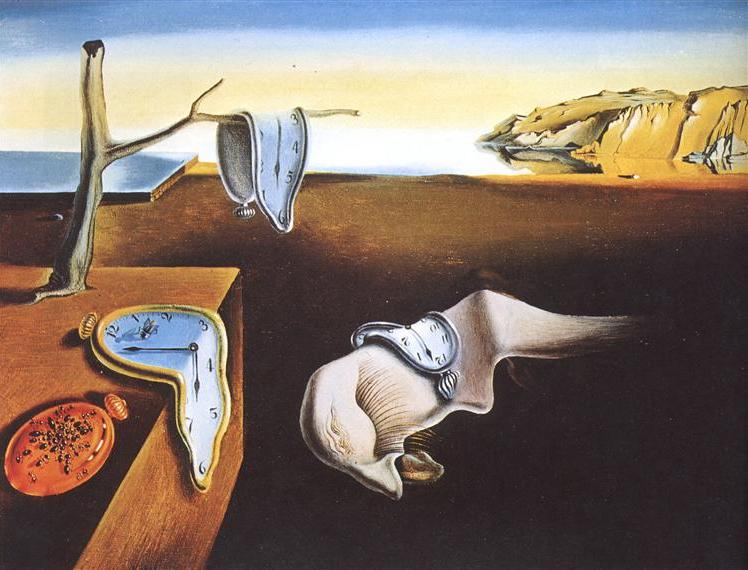
His iconic work The Persistence of Memory (1931) deals explicitly with the elasticity and instability of memory. The melting clocks suggest that time — and by extension memory — is not fixed, but fluid and subjective. This resonates directly with our project: memory is not a static storage system, but a dynamic reconstruction shaped by context, imagery, and embodiment.
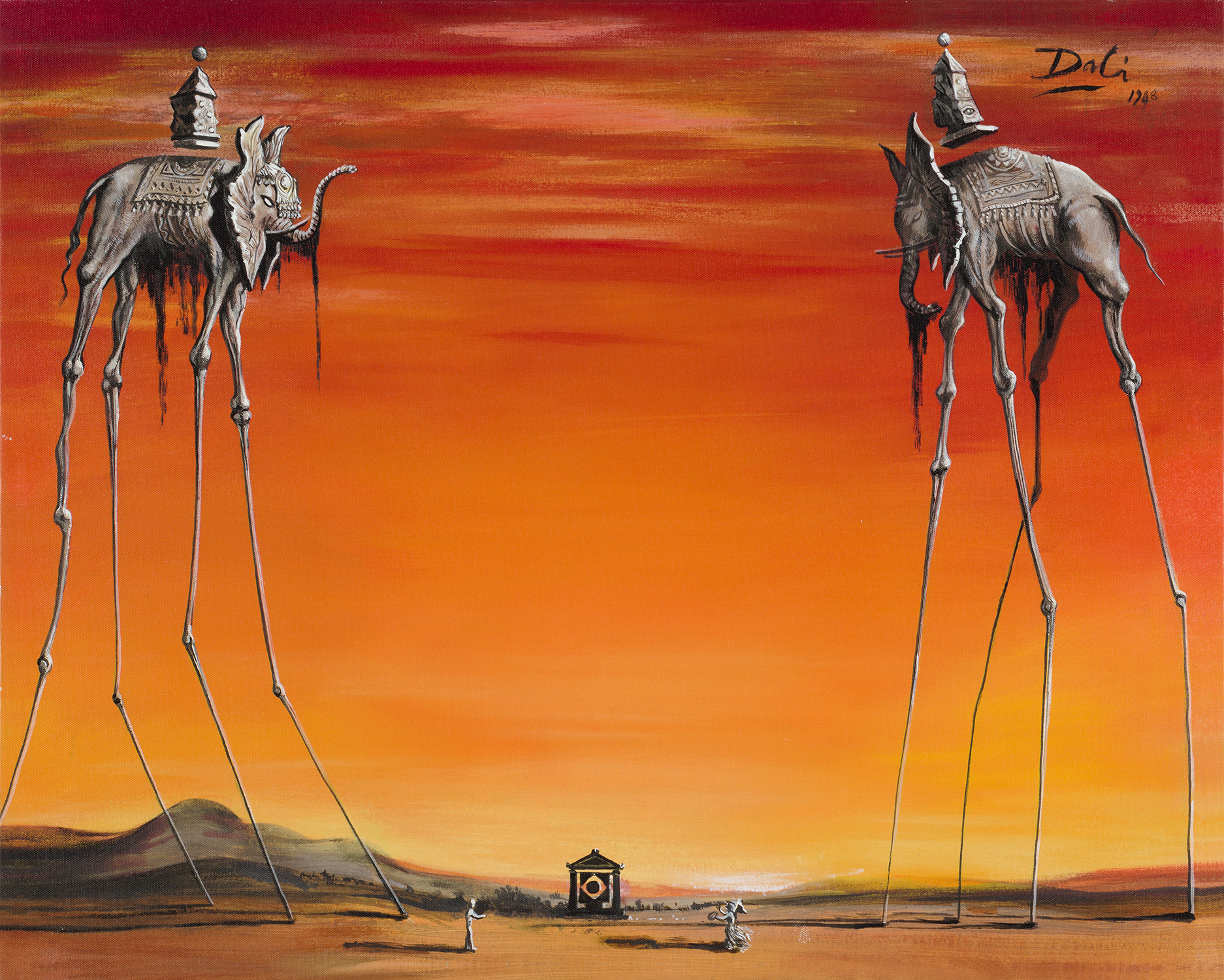
Elephants are a recurring theme in Dalí's work, most famously in The Elephants (1948). Culturally, elephants are associated with extraordinary memory — the saying "elephants never forget" makes them a natural symbol for mnemonic power. In our title, however, elephants stand for something more.
Dalí paints elephants with impossibly long, fragile legs — spindly stilts supporting enormous bodies. This creates a tension:
- Elephants = power, monumentality, permanence
- Legs = fragility, instability, dream-like distortion
In interpretations of The Elephants, the elongated legs have been understood as symbols of memory and its distortions. The structure appears strong, yet it is precariously unstable.
In our project, the "elephants" allude to artificial intelligence systems. Like Dalí's creatures, AI systems can appear monumentally powerful — capable of remembering vast datasets, generating rich imagery, and supporting cognition. Yet they rest on fragile infrastructures: probabilistic models, statistical associations, and architectural constraints that can distort, hallucinate, or collapse under pressure.
To "offload agency to elephants" means to transfer part of our imaginative labor — our encoding effort — to technological systems. In the augmented memory palace (2D and VR), we let the system pre-place images, reduce imaginative cost, and scaffold spatial associations. But this raises a central question:
How does offloading imagination to technological elephants affect memory?
Finally, Dalí is culturally relevant as a Catalan artist 🎨